Department of Pharmaceutical Chemistry
Pharmaceutical chemistry is an interdisciplinary science that has experienced remarkable growth over the past decade. Traditionally regarded as a branch of organic chemistry, it has now evolved into a highly complex and advanced field. It involves various aspects such as the synthesis, isolation, purification, and characterization of organic compounds intended for use in the treatment and cure of diseases. Additionally, it establishes a crucial relationship between chemical structure and biological activity.
Medicinal chemists play a vital role in the design and development of selective, potent, and non-toxic new chemical entities with desirable pharmacokinetic properties. The design of improved molecules remains a central focus in medicinal chemistry. These professionals are deeply involved in pharmaceutical research, where they synthesize, purify, and analyze novel bioactive compounds.
While identifying organic lead compounds is essential, the real challenge lies in optimizing their structures to enhance biological activity. This involves modifying specific positions on the molecular framework to achieve better therapeutic outcomes. Modern medicinal chemistry utilizes advanced tools such as drug design software, high-resolution spectroscopy techniques, and high-throughput screening methods.
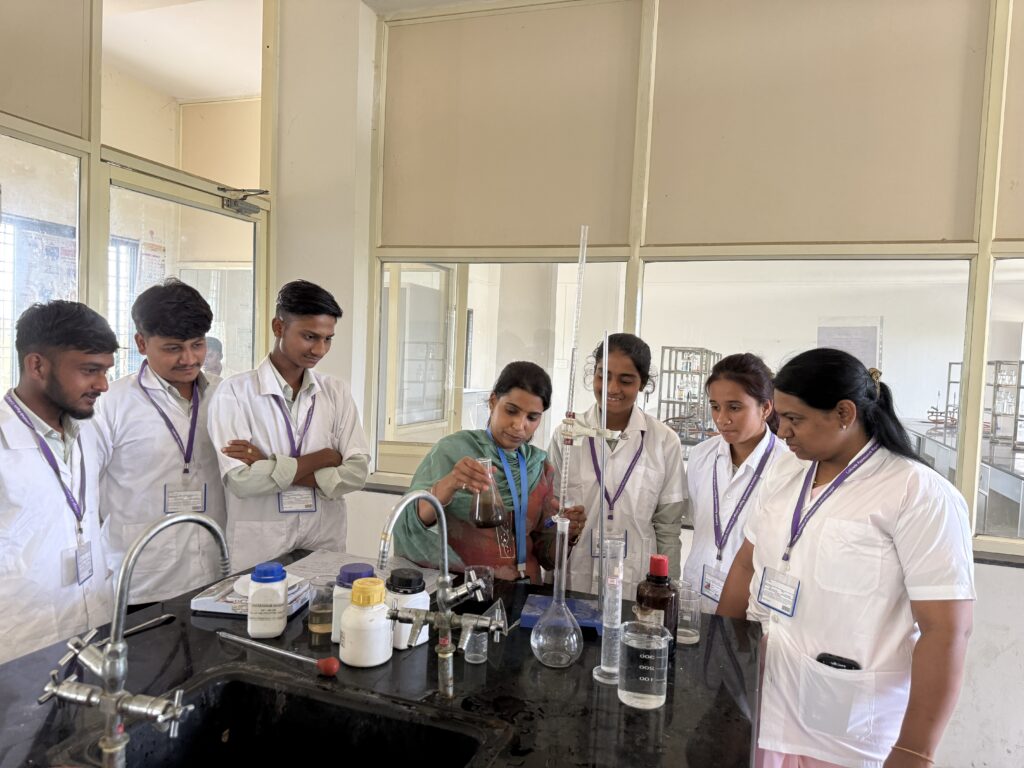
The postgraduate chemistry department is equipped with two well-established laboratories for synthetic and analytical work, featuring sophisticated instruments and software to support advanced research activities.